
This session focused on how preparation is the key to compliance including: what you will need to hand and what to do if you can’t find it; what levels of staff training need to be considered; and risk assessment libraries & best practice.
Preparation is Key to Compliance!
What is an audit?
It is important to note that an audit is not an inspection!
Audits can cause misapprehensions among staff who do not understand what the process is for or think there are potential enforcement repercussions. Schools can help manage expectations of staff regarding audits by explaining that its purpose is to help them.
A safety audit is a different process compared to OFSTED visits, audits conducted by insurance companies, etc. Audits by insurance providers are specifically focused on your policy, insurance loopholes and are not focused on every aspect of legal compliance. NB: Your property insurers will not be interested in staff welfare and work-related stress management provisions, but the HSE will.
RPA insurance schemes exclude certain mechanical and electrical inspection visits including inspections of pressure systems or LOLER. You will need to audit, monitor and implement provisions to make sure everything is in place.
Reviewing what is already in place and what is missing to achieve compliance is one of the first steps in preparation and helps staff combat anxieties.
First steps
1. Clarify the documentation for review- Which documentation will be reviewed for the audit and in what format?
- Some examples include policy, risk assessments, training records, first aid and medicine arrangements, educational visits and preventative maintenance records.
- The specifics for your building will determine what maintenance records are required and whether it’s a new build, old building, etc. E.g., new buildings are likely to have fire engineering installations (fire dampers) compared to an old building that may have a basement coal cellar you must manage.
- Can you access the paperwork required on the day?
- Check whether it is in electronic or paper copies.
- Ensure the documents can be accessed. If only one person, who is on leave or ill, can open files from a shared drive, you will not access to the necessary documentation.
- For example: H&S lead, premises lead, school business manager, headteacher, first aid and medicines leads, subject leads and technicians.
- Audits can start at 4-hour meetings but range anywhere from three to six hours.
- Ask questions such as, who is available throughout the day? When are your breaks? Schedule these as it can be stressful to manage staff welfare during an audit.
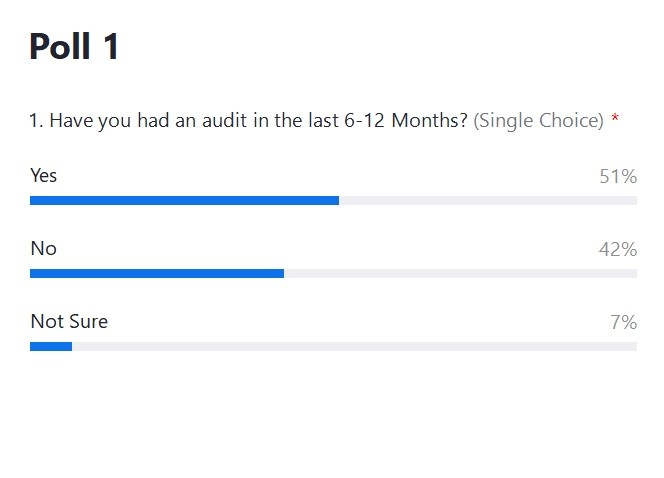
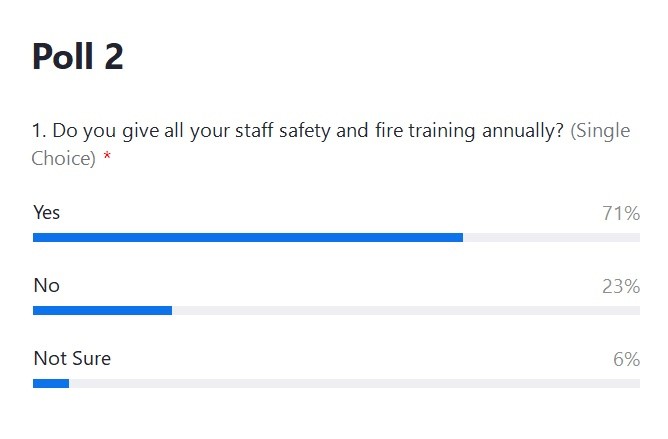
Polls
Training Programs
When assessing your training program, you should begin by identifying who within your school/academy is your training lead and training administrator.
Training program essential steps
1. Identify training needs through the policy and risk assessments for each job role with different responsibilities.- Do you have central roles that require additional training, e.g. A Governor for Health and Safety or Trust Compliance Lead
- Have you covered the 5 core training areas for all members of staff?
- H&S Basics, Fire Safety, Work at Height basics, Manual Handling and Stress Management
2. Clarify refresher periods that are relevant to your school and workforce
- Fire safety, fire wardens and asbestos are annual renew,
- All others are 12-24 months risk-based or premises specific for higher risk jobs
- Instructor led training over e-learning
- Ladder training
- Manual handling
- Behavioural or medical support training in SEN schools
- Allergy training
- Various other specialist training
- Nominate a Medical Lead (Or first aid and medical lead) - a member of staff with additional responsibilities to manage all aspects of medication administration.
- The training can range from e-learning modules to instructor-led courses depending on the level of responsibility and risk being managed.
- E-learning will cover subject areas such as cough medicine, antibiotics, low-risk pain medicine (aspirin and ibuprofen), allergy medicines.
- Instructor-led courses delivered by a medical professional, e.g., a nurse, would include medication such as epilepsy medicines, epi-pens, asthma inhalers, controlled drugs including ADHD, anxiety and medicines for depression.
Risk Assessment Libraries
- General RAs for all school activities including classrooms and each subject area, common areas, and external play areas.
- Specific RAs for practical departments that include external guidance. For example, AfPE, CLEAPSS, DATA, NSEAD, etc.
- SEN provisions for specialist care and activities
- Sports facilities including external and internal. For swimming pools there are additional legionella management requirements. NB: Do you hire or let out your sports facilities or any part of your school? If so you must complete a risk assessment for lettings and from the groups hiring the facilities.
- Manage who is reviewing your risk assessments and how often they are reviewed.
5 Key Points to Take Away
-
Allow enough time to prepare for the audit.
-
Manage access to documentation and information.
-
Manage staff expectations so it is not on one person but an entire team effort.
-
Request clarification on documentation and key contacts.
-
Discuss with your staff how you will use the audit report.
To review Judicium’s forthcoming sofa sessions please click here.
Follow us on Twitter - @JudiciumEDU
_1000.png)