

This blog is based on Judicium’s Safeguarding ‘Sofa Session’ from the 4th February 2026, with our resident experts Joanne Bocko and Sarah Cook.
Poll 1, Part 1
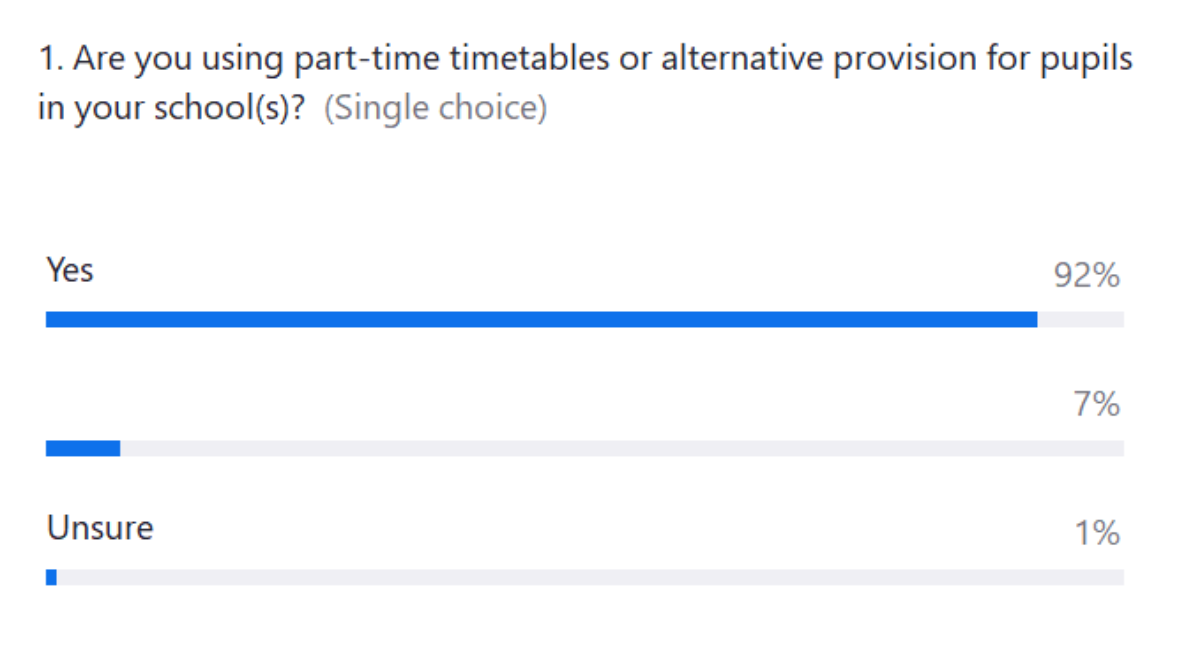
Poll 1, Part 2
.png)
Area of Focus For Ofsted
Under the new framework, alternative provision has been a focus for Ofsted. Judicium's audits review this as an area of risk, as we are aware that some schools were graded as not effective in safeguarding due to not evidencing careful consideration of the safety of children in such provisions.
We have seen and increase in inspectors quizzing leaders in this area. In particular, regarding part-time timetables and how leaders ensure children are safe with clear links within risk assessments in relation to safeguarding.
Part-time timetables are often used for pupils with increased vulnerability factors. As soon as a child isn't in school full-time, visibility drops. Whilst guidance is clear that part-time timetables should be short-term, have defined end points, and clear plans for returning pupils to full-time education, we need to recognise that even when all these expectations are met, from a safeguarding point of view, reduced time in school often means increased vulnerability.
How To Manage Risk?
Any part-time timetable should be supported with a risk assessment. From our experience working within schools and academies, the trend we see is that schools have either verbally considered or provided some form of paperwork to their LA. However, our best practice advice is to encourage a written risk assessment that outlines the safeguarding risks at home and when travelling to and from home.
While some schools might say, if there was risk, we wouldn’t allow them to go on a part-time timetable, which we understand is a fair point. However, evidence is key so it is important to have this consideration recorded.
Sometimes we may see part-time timetables used to manage challenging or unsafe behaviour during unstructured periods, e.g. lunchtime. You must consider whether reducing structure even further, by sending the child into the community or the home, could present a greater safeguarding risk, particularly where there are concerns about supervision and parenting.
Studies show students vulnerable to exploitation are most vulnerable on their journey to and from school, hence why the additional risks of travel at quieter times of day should be considered. This also factors in whether there is crossing patrol support available to assist families in their journey to school. Also it's important to consider students who may present a flight risk at these times.
Subscription clients can access templates such as part-time timetable risk assessments and alternative provision oversight records via JEDU, so they don’t have to reinvent these under pressure and save precious time.
Catch-Up Education: more than maths and English
Catching up in maths and English is always mentioned, but inspectors are increasingly asking about everything else — especially PSHE.
If pupils are missing personal development, relationships education, or safeguarding messages, that’s another increase in terms of risk. This should be considered for those on a part-time timetable, but also for those in alternative provision.
The Ofsted framework highlights that pupils who attend alternative provision should continue to receive a suitable personal development, relationships education and sex education programme, which may be an important area to check for students in a non-school AP.
Non-school AP providers do not have the same requirements for teaching as schools do. The guidance states that these providers should ensure their programmes allow children to develop speaking and listening skills. In cases where providers are delivering all of a child’s education, they should ensure that the child can develop their literacy and numeracy when attending the provision. There is no mention of PSHE here; in which case, how are these vulnerable students receiving such education?
Poll 2
.png)
What is Alternative Provision?
Alternative provision includes off-site provision to improve behaviour and education during fixed-period exclusion, and provision arranged by the local authority where pupils would otherwise not receive suitable education.
Regardless of who arranges it, safeguarding responsibility remains with the school, not the LA or other involved party.
KCSIE tells us you need
- Written confirmation from the AP provider that appropriate safeguarding checks have been carried out on staff and volunteers. NB: Think about what you are expecting to see in these letters of assurance, and consider if the letter is explicit about overseas checks and the levels of DBS checks.
- Written confirmation that the alternative provider will inform the commissioning school of any changes (including changes of staff).
- To know where a child is based during school hours, which should include records of the address of the alternative provider and any subcontracted provision or satellite sites the child may attend.
- To regularly review the alternative provision placements you have. Reviews should be frequent enough (at least half-termly) to ensure that the placement continues to be safe and meets the child’s needs.
- If safeguarding concerns arise, the placement should be immediately reviewed and terminated if necessary.
This is the case for all and any settings. Even if the setting is based in another school, run or recommended by the LA, or registered with Ofsted.
If a Local Authority has recommended an AP, do not assume that the LA has conducted due diligence. Your aim is that the safeguarding expectations you have would be replicated in the alternative provision.
Poll 3
Trust Level Alternative Provision
Key Questions for MATs: Can you see the whole picture?
We often find that individual schools feel confident about their own alternative provision arrangements, but when you step back, there isn’t always a clear line of sight across the trust.
Some useful questions for trusts include:
- Do you know how many pupils across the MAT are on part-time timetables or accessing alternative provision?
- Are the same providers being used across different schools — and if so, are safeguarding checks and reviews consistent?
- Are there patterns or trends, for example, particular groups of pupils, year groups, or schools with higher reliance on AP?
It is important that trusts can identify themes, gaps, and risk hotspots, as well as compliance at individual school levels. For example, one school may have robust risk assessments; another may rely on informal arrangements. One setting may review placements half-termly, another annually. Individually, these might seem reasonable, but collectively they highlight inconsistency — and that’s where risk sits.
Some trusts are maintaining a central register of pupils on part-time timetables or in alternative provision, whilst there is no expectation that trusts do this, we would expect to see the collation around these pupils to enable regular trust-level review points to identify trends, gaps, or emerging risks.
Trusts can also support their schools by creating standardised expectations for risk assessments, reviews, and letters of assurance. This isn’t about removing autonomy, it’s about providing assurance, especially where pupils are at greater risk of harm.
Hire and Lettings
Another area where schools and trusts have a responsibility to ensure that appropriate arrangements are in place to keep children safe is with hire and lettings. This responsibility may sit with a member of staff in the facilities management team.
Schools and trusts should ensure lease or hire agreements reference safeguarding, and have a clear clause that states, ‘a failure to comply with safeguarding would lead to a termination of their contract’, placing the importance of safeguarding front and centre for any hirer. You should also obtain and review a copy of the hirer's Safeguarding Policy. Often individuals request the relevant information, but fall short on reviewing it. In such circumstances, we recommend considering whether there needs to be others involved in overseeing lettings. Good questions to ask include:
- Who is reviewing the policy
- Do they have the necessary knowledge and understanding to decide on whether this is suitable?
- Is the policy sufficiently long?
- Does it include relevant guidance or out-of-date references?
- What does this say about the provision? Do you trust their practices?
What Ofsted Says
- Leaders and staff make sure that (when they are needed) part-time timetables are short-term and have defined end points, and plans for supporting pupils’ return to full-time education are clear and appropriate.
- Pupils who attend alternative provision continue to receive a suitable personal development and relationships education/relationships and sex education programme.
- Ensure that the school or trust's procedures protect pupils who are at greater risk of harm. For example, those attending alternative provision.
- When alternative provision is used, leaders monitor pupils’ attendance carefully, both daily and over time, and take swift and effective action when pupils do not attend.
Closing Reflections
- When doing risk assessments, consider safeguarding risks.
- Ensure clear policies and procedures.
- Make sure that there is oversight by someone who has safeguarding knowledge.
- Quality of education.
- Part-time timetables and AP should be viewed as short-term with the aim of re-integrating children.
Judicium Education can help...
You can find information regarding our Safeguarding and Supervision service.
If you require any support in any of these steps or would like to talk to someone about some support for your school, please do not hesitate to call us on 0345 548 7000 or email enquiries@judicium.com
Follow us on Twitter: @DPOforSchools and @JudiciumEDU.
© This content is the exclusive property of Judicium Education. The works are intended to provide an overview of the sofa session you attend and/or to be a learning aid to assist you and your school. However, any redistribution or reproduction of part or all of the contents in any form is prohibited. You may not, except with our express written permission, distribute or exploit the content. Failure to follow this guidance may result in Judicium either preventing you from accessing our sessions and/or follow-up content.
_1000.png)

_1000.png)