_1000.png)
This blog is based on Judicium’s Health and Safety ‘Sofa Session’ from January 7, 2026, featuring our resident expert, Jamie Ashard, CMIOSH. This session focused on Common key stressors in the education sector, applying the 6 key HSE management standards for stress, completing a stress risk assessment and implementing practical solutions.
Poll 1
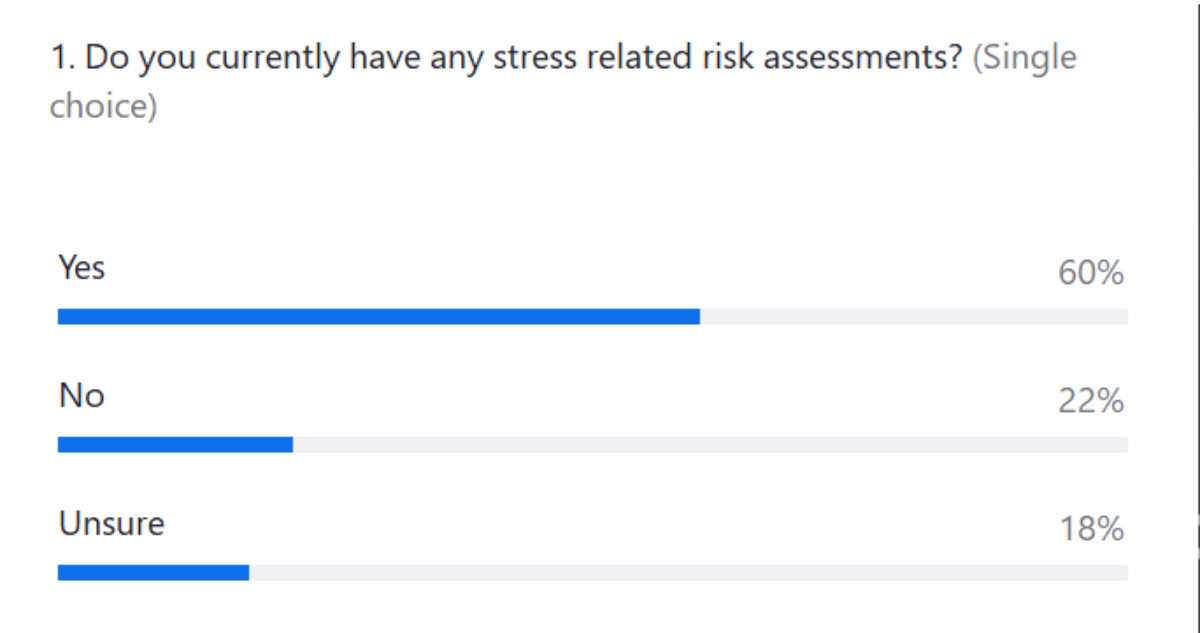
Case Study
The HSE recently took action against a university following the union's reporting failures in the university's stress management. Following the HSE inspection, the university was found to have an employee assistance programme (EAP), policies and staff surveys; however, they were found to have material breaches, and the key failures included:
- Stress risk assessments that were generic, incomplete or not done at all
- Policies existed on paper but were not implemented
- Excessive working hours became “normalised”
- Managers are unclear on their responsibilities
- Training was inconsistent and unmonitored
- Staff and unions not meaningfully consulted
- No system to identify stress “hot spots” or high-risk roles
- No effective monitoring or review of controls
The university will now be required to pay a fee for intervention, and further fines and enforcement are possible.
Poll 2
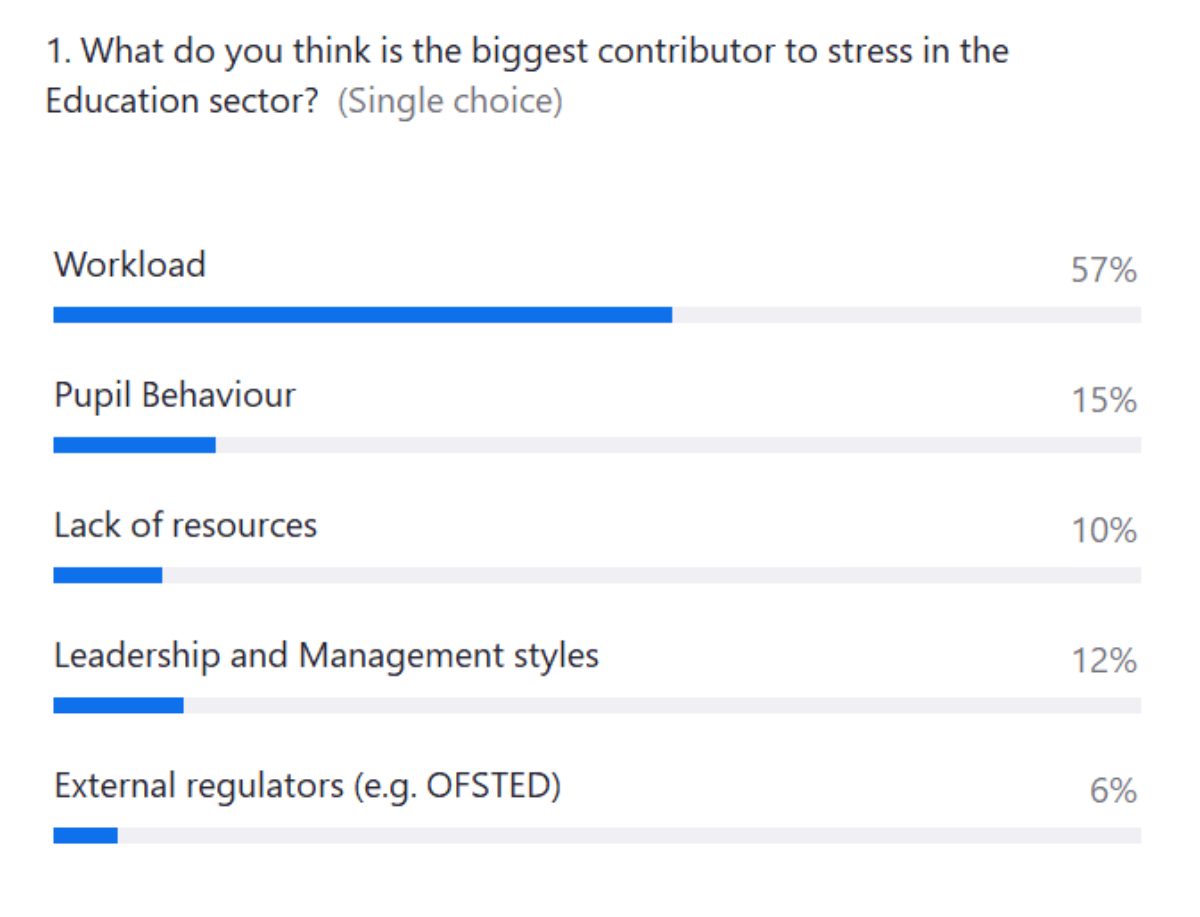
Common Key Stressors in the Education Sector
Stress is defined by the HSE as “the adverse reaction people have to excessive pressures or other types of demands placed on them”.
Within the Education sector, there are several areas which could cause stress to staff members, including:
- Workload and time pressures, including marking, planning and administrative tasks
- Role ambiguity: unclear expectations or conflicting priorities
- Lack of control over the work they complete
- Are not provided with sufficient information or support
- Student and parent behaviours: dealing with emotional or difficult situations
- Difficult relationships at work or bullying
- Change of management: joining trusts, change of leadership, curriculum changes, inspections or policy updates
- Support and resources: limited staff or budget constraints
It is important to understand that stress affects people differently, and everyone has different aspects which may affect them more than others.
Poll 3
.png)
Spotting the Signs
A common sign of stress is when workers start acting differently. Leaders should look out for signs of stress in employees.
Signs for stress within a school/ team include:
- Fractures in working relationships
- Higher staff turnover
- More reports of stress
- Increase in sickness absences
- Decreased performance/ presenteeism
- More complaints and grievances
Signs of stress in individuals include:
- More time off work
- Arriving for work late
- Being more nervous
- Mood swings
- Being withdrawn
- Loss of motivation, commitment and confidence
- Increased emotional reactions such as being more tearful, sensitive or aggressive.
View the full Teacher Wellbeing index here.
Applying the 6 Key HSE Management Standards for Stress
The HSE statistics from the 2024/2025 report showed that 964,000 workers suffer from work-related stress, depression and anxiety. The sectors which showed the highest numbers of staff absence due to work-related stress are:
- Public admin/ defence
- Human health/ social work
- Education
The HSE framework for stress helps schools to manage stress systematically. They have identified 6 key areas of work design which can affect stress levels and should be managed effectively. These are:
- Demands: Managing workload, working hours and the physical environment; people's skills and abilities are matched to the job demands; and employee concerns about their work environment are addressed.
- Control: Give employees a say in how they do their work, where possible, and consult them. Employees are encouraged to utilise their skills and initiative to perform their work effectively and to continually develop new skills.
- Support: Provide adequate information and support; policies and procedures are in place to adequately support employees; systems are in place for colleagues to support colleagues; and employees are aware of what support is available and how to access it.
- Relationships: Prevent poor relationships, bullying or harassment; promote positive behaviours and ensure fairness; procedures are in place to prevent and resolve unacceptable behaviour; and employees are encouraged to report unacceptable behaviour.
- Role: Ensure people understand their job and their responsibilities, and employees can raise concerns about any uncertainties or conflicts within their roles.
- Change: Consult employees and manage organisation changes effectively; provide information to employees promptly; and if necessary, provide additional training and support when there are changes to jobs/ roles.
Poll 4
.png)
Completing a Stress Risk Assessment and Implementing Practical Solutions.
The Health and Safety at Work Act 1974 requires employers to safeguard the health and welfare of their staff. The management of Health and Safety Regulations 1999 requires employers with over five employees to complete written risk assessments.
The HSE's 5 steps to a risk assessment for stress management would include:
- Identify stress hazards: Information could be gathered using staff surveys, staff feedback and absence data.
- Assess the risk: Evaluate the likelihood and impact of stress-related harm.
- Control measures: Adjust workloads or redistribute tasks
- Offer flexible working options if available
- Wellbeing initiatives
- Provide training to leadership
- Provide clear job roles and responsibilities
- Improvements to the environment, i.e., lighting.
- Refer to occupational health where required
- Provide a route for staff to raise concerns
- Implement/ promote the employee assistance programme
- Promote a work-life balance and encourage staff to take breaks and annual leave
- Debriefs and check in with staff after significant events - Record findings: Document the hazards, controls and actions identified during the risk assessment process.
- Review regularly: Update and make any changes as and when required. Depending on the situation, the assessment may require more frequent review.
When to Complete a Stress Risk Assessment:
- Be proactive and complete a more generic school risk assessment and ensure this is reviewed at least annually or when there are changes.
- Reactive is when an individual reports work-related stress, and therefore, an individual stress risk assessment is completed for the person.
Judicium Education can help.
We offer Stress management training courses tailored to schools as part of our eLearning package. For more information, visit here and click the health and safety tab to see the course catalogue.
Judicium Education’s Health and Safety, Facilities Service is designed to support schools, firstly, in ensuring a safe working and learning environment, secondly, in complying with the legal requirements imposed on them as employers under the various Health & Safety laws and regulations. For more information, please visit here.
We also offer accredited training courses. For more information on the upcoming health and safety live training courses, visit here.
If you require any support in any of these steps or would like to talk to someone surrounding some support for your school or trust, please do not hesitate to call us on 0207 336 8403 or email enquiries@judicium.com
If you’d like to review Judicium’s forthcoming sofa sessions, please click here.
© This content is the exclusive property of Judicium Education. The works are intended to provide an overview of the sofa session you attend and/or to be a learning aid to assist you and your school. However, any redistribution or reproduction of part or all of the contents in any form is prohibited. You may not, except with our express written permission, distribute or exploit the content. Failure to follow this guidance may result in Judicium either preventing you from accessing our sessions and/or follow-up content.

_1000.png)