
_1000.png)
Understanding the role of a Site Manager
In recent times, the expectation on Site Managers or premises staff is that they have a wide range of skill sets and handle different duties. These duties have always been in addition to the responsibilities that were expected of caretaking staff in the past. These original duties would typically be:
- Opening and locking the school buildings
- Ensuring the site is secure during and outside school hours
- Responding to security incidents or emergencies
- Dealing with the raw end of spillages and clean-up
- Acting as a key holder and liaising with emergency services when required
However, within the first hour of opening a school, they may be tasked with security issues, electrical, plumbing, and cleaning issues. Your site staff are expected to be the initial eyes and ears of the school and are the first sense check of the day. This may be the difference between your school opening on that day.
Compliance Checks
During a normal working day, the role can shift. It can be difficult to prioritise what is most important when it comes to maintenance costs, cleaning, porterage or compliance. Premises staff are usually the first and last fire wardens on site, meaning suitable training that is up-to-date could be the difference between a safe school site and a major incident.
The school needs evidence that staff have received the correct training. This is to ensure that premises teams are compliant with important safety tasks, such as fire alarm evacuation.
For bigger teams, Site Managers are expected to manage training and maintain the school’s PPMS (planned preventative maintenance). This includes managing lettings cover, site teams' risk assessments, COSHH, working with power tools, hand tools and working at height.
These tasks require a wide range of skillsets, so supporting the day‑to‑day running of the school premises, completing internal compliance, and meeting health and safety requirements can be a lot to tackle. The multi-skilled elements of the role can be challenging for both schools and the site team.
All schools must now carry out daily site safety inspections, such as lighting, heating, and water. Site teams should also be identifying hazards and reporting or fixing minor issues. An example of this is that all fire exits should be clear with weekly testing, and monthly inspections should take place to ensure all fire equipment is maintained. The site team should be supporting fire drills and emergency procedures. Site teams should be keeping daily records for all health and safety compliance tests and inspections to ensure that there are consistent processes that all staff carry out with clear evidence.
Example
When supporting a school with their cleaning contract, we were asked to check through their compliance, along with COSHH information. We found that the weekly fire testing hadn’t been completed for months, and when we informed the head teacher, they proceeded to backfill weeks that had been missed. This raised concerns for the lack of training, time and safety elements.
This example shows how quickly your compliance can fall off with absence and why it’s critical to have a backup plan.
Safeguarding Procedures
Schools need to ensure that safeguarding procedures are in place, especially when managing contractors on site. Contactors need to read your safeguarding policy and sign your asbestos register when required. Premise teams also need to sign the asbestos register, especially when drilling into the walls to install pictures or shelves.
In relation to DBS, good practice is for contractors to wear a different colour lanyard. This procedure has been successfully adopted by numerous schools for easy identification and to comply with safeguarding.
The Changing Role
The role of the premise staff can be very manual and often includes tasks such as:
- Cleaning duties
- Maintaining playgrounds, paths, and outdoor areas
- Clearing litter, leaves, snow, or ice. Gardening tasks such as mowing lawns and trimming hedges
- Setting up halls and rooms for assemblies, exams, events, or parents’ evenings. Moving equipment, tables, and chairs
- Supporting staff with practical issues around the site.
- Assisting during school functions and after‑hours events
- Supervising external contractors on site and ensuring they follow health and safety rules
- Ensuring all work has been completed to the correct spec and standard
- Managing deliveries and site access
Training Requirements
Your site team should have training on:
- Health and safety
- Fire awareness
- COSHH
- Asbestos awareness or duty holder, if a site manager
- Water management
- Working at heights
- Lone working and manual handling
- Risk assessments, written and visual
It is also recommended to have practical training on:
- Fire alarm evacuation
- Fire doors and fire extinguisher safety inspections
- Visual risk assessments, highlighting potential health and safety concerns
- Building condition
- Compliance management
.png)
Although 34% of webinar attendees felt confident that their site teams receive the correct training, 56% said they were only somewhat confident. As the role of premises staff continues to expand, this suggests there may be gaps or a lack of clarity around what training is needed and how it should be delivered.
There are likely other contributing factors too, including limited time, stretched resources and budget pressures; challenges that many schools are already navigating.
Managing Compliance From a Legal Perspective
Managing compliance is a legal requirement that your premises team should be undertaking and recording regular inspections to ensure your building is not only compliant but also well-maintained. It’s also one of the most frequent things that premises staff tell us they don’t have time for, amongst their other duties. It seems that compliance appears to be the first thing that suffers when something else happens. It should be a priority in all school work schedules, and if you haven’t built adequate compliance checking time into the premises workflow, you need to make it a priority.
Legislative compliance spills into daily aspects of the site team's role. You’ll be acutely aware of the Health & Safety at Work Act 1974. Within that lies several crucial elements that any member of the premises team would be expected to know about and adopt. Identifying a problem that requires a ladder doesn’t preclude you from the task, but a process must be followed, and improvising isn’t an option. A caretaker was changing lights in the school hall, on his own during school holidays and fell from a height, breaking both of his legs. This happened in the days before mobile phones, and he had to crawl to the school office and use the phone there to alert someone.
Example
We were asked to supply emergency site cover to a 2-form entry primary school. The school's permanent site manager had been off for 6 months, and during this period, the school had used various companies for site cover. None of these companies would manage the school's internal compliance or assist with the PPMs. This resulted in the school requiring a complete premises schedule, which was introduced over 4 weeks. This included the internal compliance and assurance that all the PPMS were updated and any outstanding issues were addressed.
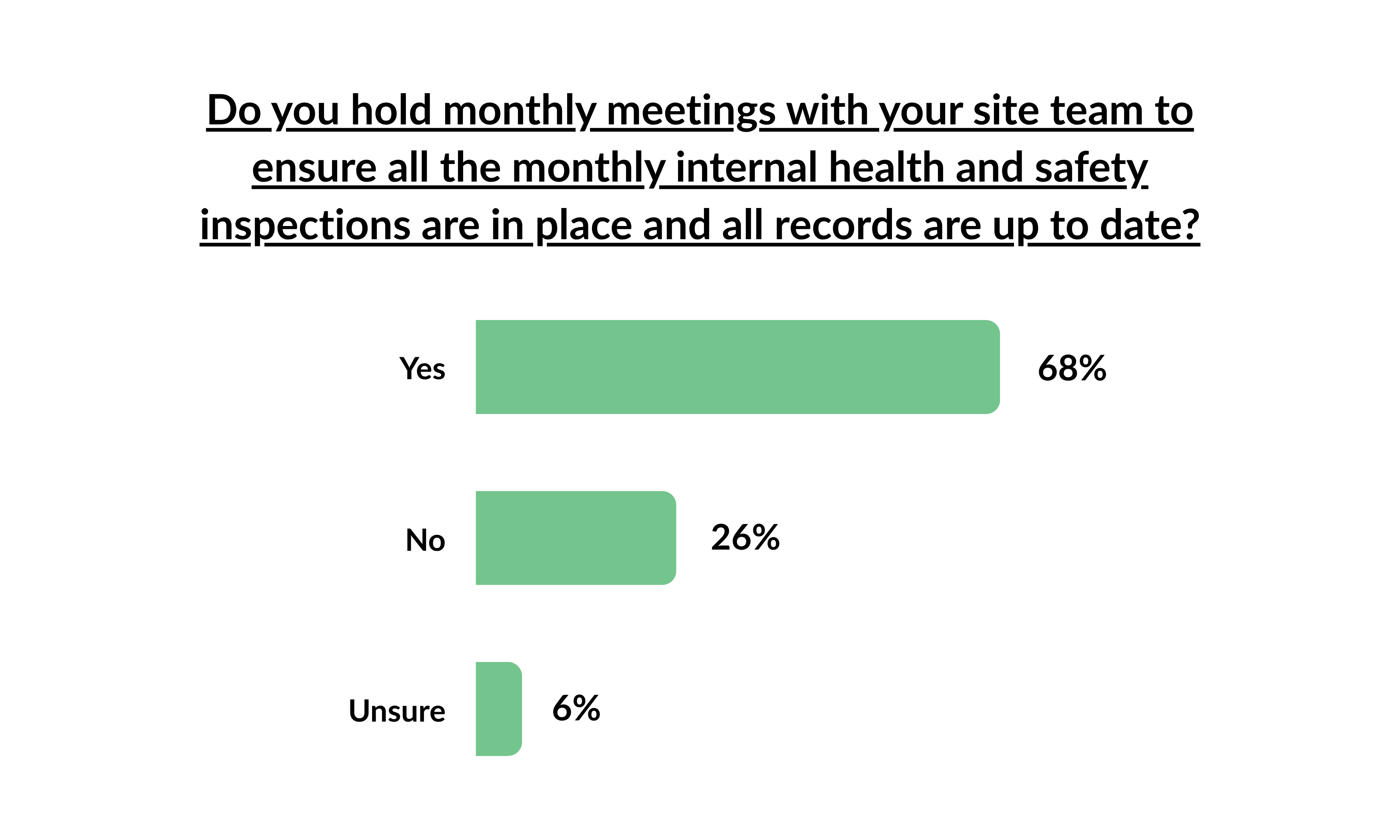
Along with your internal compliance, there should be additional monthly inspections in place, with all records kept and all building defects reported.
Your site team should carry out monthly inspections on the following items:
- Glazing inspections
- Asbestos management
- Building and outbuildings safety inspections
- Ladders and step ladders safety inspections
- Building cleaning
- Compliance of safeguarding
- Liability insurance
- Display energy certificate
- Fire exits and fire evacuation signs
- Kitchens
- Ceilings
- Flooring
- Roofs
- Water fountains
- Toilets
- Hand dyers
- Light switches, plug sockets and data sockets
- Evac chairs inspections
Combination Audits
A combination audit offers your school both support and recommendations by focusing on your school's premises, cleaning standards, good estate management, Health and Safety, Internal compliance management and planned preventative maintenance.
This audit not only highlights current legislation and best practice guidelines. It also highlights common mistakes that can lead to poor Health and safety awareness and procedures, building/property damage, safety hazards and accidents, and poor hygiene issues.
It will help your school to install the best procedures and schedules, identifying the correct building inspections and installing both the correct reactive and planned maintenance plans. Which in turn will give you lower initial costs and budget efficiency. Simple management and active immediate response to urgent needs will help your school focus not only on Health and Safety, but also on building safety. This will create a greater teaching and learning environment, but will also create a welcoming environment for all parents, carers and visitors.
.png)
Our recent poll revealed that 41% of attendees struggle most with scheduling and time management in their setting. And it is hardly surprising. With the growing expectations placed on premises teams, staying on top of weekly checks while juggling requests from multiple departments, as well as the inevitable emergency tasks, can quickly become overwhelming.
One piece of advice our experts consistently share is to separate day to day operational checks from ad hoc staff requests. Keeping these in different documents or systems makes it easier to prioritise and prevents important tasks from being buried. Just as importantly, they remind leaders and premises staff that it is okay to say “no” or “not right now” to requests that can safely wait. Setting these boundaries supports better time management and ensures that essential tasks are not compromised.
Top Tips
- Allow your premises team the time to complete their compliance. It’s too easy to let it slip on a busy school day but this is equally as important as anything else that is done on any given day.
- Communication is so important
- Making sure that your training is up to date and recorded
Judicium Education can help...
Our combined Facilities Management Services ensure the pupils in your care have a place of learning that is safe, compliant and a pleasant place to be.
Judicium Education’s Facilities Management Service is designed to support schools, firstly, in ensuring a safe working and learning environment, secondly, in complying with the legal requirements. For more information, please visit here.
If you require any support in any of these steps or would like to talk to someone about some support for your school or trust, please do not hesitate to call us on 0207 336 8403 or email enquiries@judicium.com
If you’d like to review Judicium’s forthcoming sofa sessions, please click here.
© This content is the exclusive property of Judicium Education. The works are intended to provide an overview of the sofa session you attend and/or to be a learning aid to assist you and your school. However, any redistribution or reproduction of part or all of the contents in any form is prohibited. You may not, except with our express written permission, distribute or exploit the content. Failure to follow this guidance may result in Judicium either preventing you from accessing our sessions and/or follow-up content.
(4)(2)(1)(2)(1)(1)(1)(1)_1000.png)
(1)_1000.png)
_1000.png)