_1000.png)
Why Concerns and Complaints are Becoming a Bigger Issue
- Societal: Post-COVID, this has gotten worse, where many people have high expectations that schools often can’t and sometimes should not be expected to meet.
- Social Media: Has opened up a major platform where people can freely voice opinions and demand answers instantly.
- Parents/ Carers: Most complaints come from parents or carers, with recognition that the system does not work for all. We have seen a rise in issues related to SEND.
- Reactive Schools: As soon as a school receives a complaint, some jump into defensive mode.
- Data and anecdotal feedback: According to ParentKind, 5 million complaints were made to schools in 2025.
How many complaints has your school or trust received in the past 12 months?
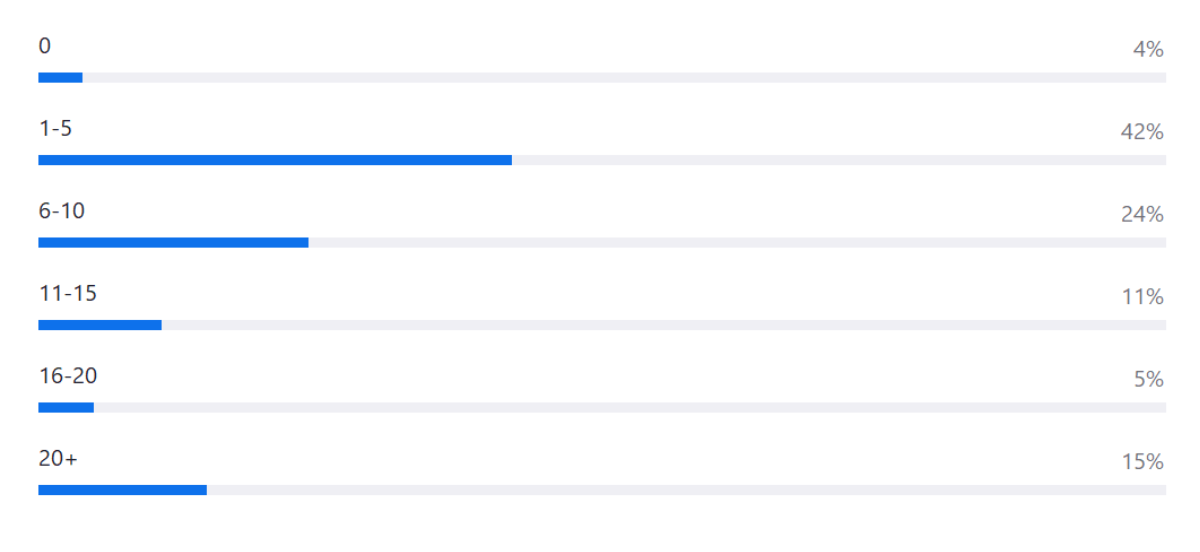
What has been your school’s experience of complaints in the past 12 months?
.png)
Types of Complaints
It is important to recognise that it is not just parents/carers who can complain; maintained schools must accept complaints from members of the public too. The areas that parents complain about are many and varied, and can range from complaints that their child has been offered food they don’t like at lunchtime, to feedback a pupil gets written in an exercise book. Many are about parental perceptions of their child being treated unfairly; this might be in connection to their needs or as a consequence of the school’s behaviour policies being breached and pupils being sanctioned.
A ParentKind survey suggests that the most common areas of complaint are:
- Bullying (30%)
- Safeguarding/ Safety concerns (15%)
- Behaviour and discipline policies (15%)
- Homework (14%)
- Teachers' behaviour and approach (14%)
DfE Guidance
The DfE provides non-statutory guidance outlining a two-stage process for complaints, with the expectation that early resolution is the best course of action.
This includes:
- An informal stage where schools should encourage parents to talk to them first, encouraging open communication
- A formal stage where the written complaint is handled under the policy
Although not mandatory, the DfE emphasises that schools should not involve lawyers in complaint handling and should be managed internally including governor panels where required. Further advice can be found under the DfE's model complaints policy.
AI's Influence on School Complaints
AI is now accessible to most people and is increasingly used by complainants. It can be a useful tool as it can give some complainants access to raising concerns about a school and its provision, which they may not have. E.g. those with learning needs, those who struggle with literacy and those whose first language is not English. However, the use of AI is continuing to rise.
"In my role at Judicium, I am frequently commissioned to undertake investigations into complaints, and I estimate that over the past year, in excess of 80% of all complaints I have seen, I suspect have been generated in whole or in part using AI" - Steve Barker, Host of Sofa Session.
The attendees who have received a complaint this year, do you suspect part or all of the complaint was AI-generated?
.png)
Spotting the Signs of AI-Generated Complaints
There are a few signs that AI may have been used:
- The length of the complaint (AI generally uses more words than most of us would)
- The use of challenging/often quite aggressive language (e.g. I am disgusted and appalled at….)
- Reference to legislation (often Equalities Act, Human Rights, etc.), sometimes irrelevant US legislation.
- Reference to case law that is not relevant to the complaint
- Threats to referring to Ofsted/DfE
- Seldom any reference at all to what resolution might look like (e.g. apology, policy change, etc.)
How Can Schools and Trusts Successfully Manage the Complaints Process
In the current climate of our education system, where many schools are struggling to balance budgets, improve admission numbers, recruit and retain staff, tackle attendance issues, manage behaviour and all the other plates that schools and trusts have to spin, it’s not difficult to understand why some schools may resort to defence mode.
Some school leaders are offended or affronted that a complaint has been made, and the initial responses are often formal, harsh and perceived as unfriendly. This can be a cultural issue that often overlooks the fundamental premise that part of the role of school is to seek to resolve concerns before they become complaints. Early intervention of raised concerns can often wind back the clock and offer the route to resolution.
Actively demonstrating that you want to hear about aspects of school and school life that stakeholders are not happy with, or don’t understand, or have questions over is crucial.
What best describes your school or trust’s culture towards complaints?
.png)
Example:
In a complaint hearing panel, the complainant was asked if they had anything further they wished to say. After summing up, the complainant responded with ‘Thank you – this is the first time in this process that I have felt listened to’. Good customer relations are vital to any organisation, and the most effective way to foster positive customer relations is to think culture.
A question to ask: Is your school/trust culture one where complaints are part of a reactive/firefighting approach, or a resolution-oriented approach that is friendly, professional and seeks to understand?
A calm, consistent and confident framework for managing complaints
- The challenge – Shifting from reactive to systematic
- The first response – Clarifying issues correctly
- The language of de-escalation
- The core framework – A five-stage model for consistency
- The outcome – Confident inspection-ready leadership
The Language of De-escalation
Example:
Saying, ‘That’s what our policy states,’ suggests defensive language. However, using 'let me explain the reasoning behind that decision and how the policy applies here' offers clearer communication with emphasis on care and consideration.
Key Takeaways
- Ensure you have an open-door culture, where Head Teachers and SLT are seen as approachable. Examples could be at the school gate, parent evenings, etc
- Encourage feedback from key stakeholders (Parents)
- Try to tap into what WhatsApp groups of parents are concerned/talking about (almost 70% of parents – Parentkind are signed up to WhatsApp groups)
- Keep sharing the ‘if you have any concerns – please….. message
- Be consistent in processes. If a concern becomes a complaint, always acknowledge asap
- First step should always be ‘what would resolution look like to you/ what are you ideally looking for?’
- Be prepared to say sorry and mean it
- Don’t be afraid of AI – but become aware of the indicators that it’s been used and create a bank of responses
- Investigate thoroughly – seeking resolution
- Learn from complaints (review policy, CPD, processes, etc.)
How Judicium can help...
You can find information regarding our Governance and Clerking service here.
Whether it's governance advice, clerking, training, or bespoke school suspensions and permanent exclusions guidance, our expert governance support, compliance guidance, and governing body development help schools and trusts build strong leadership, effective decision-making, and full regulatory compliance, ensuring a well-structured, accountable, and high-performing governance framework.
If you would like more information on how we can support you or more information regarding Jedu, please get in touch with us.
If you require any support in any of these steps or would like to talk to someone about some support for your school, please do not hesitate to call us on 0345 548 7000 or email georgina.decosta@judicium.com.
Follow us on Twitter: @JudiciumEDU.
© This content is the exclusive property of Judicium Education. The works are intended to provide an overview of the sofa session you attend and/or to be a learning aid to assist you and your school. However, any redistribution or reproduction of part or all of the contents in any form is prohibited. You may not, except with our express written permission, distribute or exploit the content. Failure to follow this guidance may result in Judicium either preventing you from accessing our sessions and/or follow-up content.
(1)_1000.png)
_1000.png)