_1000.png)
This blog is based on Judicium’s Health and Safety ‘Sofa Session’ from the 28th January 2026, with our resident expert Alice Campbell.
Case Study: School Trip Disaster in the Lake District
A group of secondary school children had to be rescued by Keswick Mountain Rescue Team in the Lake District after becoming stranded in winter conditions.
Their school was sentenced in February 2022 for breaching sections 2(1) and 3(1) of The Health and Safety at Work etc. Act 1974. The school was fined £30,000 and ordered to pay a victim surcharge of £181 and costs of £4,574.90 for its failures to adequately manage the risks posed by the trip.
On 5 March 2020, a group of 13 Year 10 pupils were on an organised trip to the Lake District, led by one teacher and a teaching assistant. Weather conditions on the day were cold and icy. Despite reviewing the weather report, which stressed the dangers to those ascending above the snow line, the school decided the trip should still go ahead as planned.
The school children did not have suitable equipment and clothing, and the adults leading the trip had no formal qualifications in mountain leadership or any experience of mountain environments in winter conditions.
During their ascent, at least two members of the public warned the party to turn back, and as they began their descent, they inadvertently ventured off the path, entering steep terrain featuring vertical rock faces of around 20 metres in height.
While descending, one of the pupils slid on the ice and fell several metres, sustaining minor cuts. Another pupil panicked and ran from the group down the mountain and was found by members of the public.
HSE inspector Stephen Garner said: “Excursions into mountains, particularly in winter, need to be led by people with the appropriate skills, knowledge and experience. If a school does not have access to the necessary expertise in-house, then licensed Adventure Activities providers are available to manage the technical aspects of this type of trekking activity.”
“This incident was entirely avoidable. HSE recognises the benefits of outdoor learning activities, including those involving hiking or trekking in mountain environments; schools need to take sensible and proportionate measures to control the risks involved. This trip should not have gone ahead without such measures in place.”
Key Learnings
- Planning decisions must demonstrate compliance, not just intention
Reviewing information (like weather forecasts) is only compliant if it directly informs decisions. Where conditions materially increase risk, schools must be able to evidence why a trip proceeded, was adapted, or was cancelled — otherwise the duty under the Health and Safety at Work Act is not met. - Legal duties require proven competence, not goodwill
Schools must ensure that those leading higher-risk activities have the appropriate skills, knowledge, and experience for the environment and conditions. Where this competence does not exist internally, compliance means using suitably qualified external providers — not proceeding regardless. - Risk assessments must be suitable, sufficient, and implemented
Compliance isn’t about having paperwork; it’s about identifying real hazards, applying effective controls (including equipment, supervision, and emergency arrangements), and following them in practice. Generic or poorly matched risk assessments leave schools exposed to enforcement action and prosecution.
.png)
Implementing and Reviewing an Education Visit Policy
Poll 1, Part 1
Poll 1 - Part 2
.png)
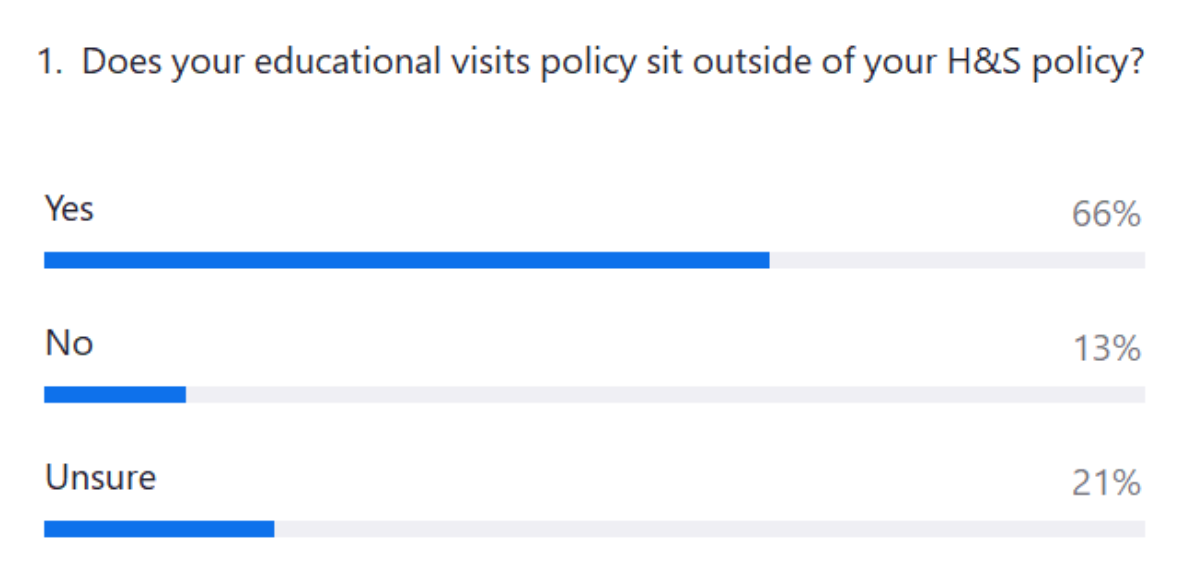
As with all H&S subjects, all of your compliance-related planning and procedures stem from an Educational Visits policy. Most schools are more than capable of planning a trip or sports fixture, booking the venue, but documenting the entire process and ensuring a planning framework is often where mistakes can be made.
Judicium recommends a separate policy for educational visits, trips and sports fixtures. These can range from local walks to the park, museum or farm trips using different methods of transport, through to overnight camping events or overseas trips for high-risk activities.
The policy should detail the roles and responsibilities of all staff involved with visits and fixtures, how arrangements will be planned and communicated, emergency planning and how you will work with external contractors or providers.
Ensure to include expert guidance from external sources such as the Outdoor Education Advisers Panel (OEAP), Learning Outside the classroom and ROSPA.
Types Of Off-site Visits and Trips
Poll 2
.png)
Routine visits with general risk assessments:
- An everyday level of risk, such as slips and trips
- Are covered by a school’s current policies and procedures
- Trips which only need a little extra planning beyond the educational aspect of the trip
Trips that need a specific risk assessment and extra planning:
These are trips not covered by current policies.
This could be due to things like:
- The distance from school
- The type of activity
- The location
- Needing staff with specialist skills
Understanding Staff Responsibilities for Education Visits
Poll 3 Part 1
.png)
Poll 3 Part 2
.png)
The Governing Body/Board of Trustees
Governors or trustees are responsible for everyone involved with trips and must liaise with the Senior Leadership Team to clarify the planning and approval processes.
Higher risk or overseas events will require a greater level of management scrutiny, and you may utilise governors or trustees to support the headteacher in reviewing plans for final approval.
Headteacher/Principal
Headteachers hold a non-delegable accountability to ensure trips are suitably planned and managed. Whilst they can delegate the responsibility for leading a trip to a qualified trip leader or initial approval of a trip to the Educational Visits Coordinator, the headteacher will continue to hold a duty of care to everyone involved.
Educational Visits Coordinator (EVC)
Not a legal requirement, but DfE guidance recommends it.
EVCs complete specific training for their additional responsibilities as they will ensure that the framework set out in the Education Visits policy is followed and the right staff are completing the correct elements of the planning and trip management process.
They are responsible for working with trip leaders to collate all the required documentation, communicate that information to those who need it, e.g. parents and sign off risk assessments and emergency plans to confirm they are suitable.
Group and Trip Leaders
Leaders must be competent in their role to lead a trip or group activity. This can range from a curriculum teacher who has been on several similar trips as a deputy for lower risk activities through to requiring specific qualifications for adventurous activities, e.g. hiking or skiing.
Leaders will work directly with the EVC to evidence how they have planned every element of the trip; they will be responsible for carrying out pre-trip visits to new venues or providers to ensure everything is suitable.
Staff and Volunteers
PTA/Parents
Support staff and volunteers on the trip have to be able to look after the pupils as their parents or carers would, so we need to be clear as to what training they need, what resources or provisions they need on the trip, and ensure a suitable number of support personnel are in place should anyone not attend/be taken ill.
This all contributes to the health and safety culture within the school, and with each of these responsible groups, training is very important. Without appropriate training, it’s hard to understand the process and their role and responsibility.
For Judicium Health and Safety clients you have access to school-specific training on risk assessments in our eLearning platform.
We recommend EVCs receive specific training for their role with refresher training every three years.
School Visit Planning - First Aid and Emergencies
First aid assessment should be completed for every trip to evidence how you will provide suitable first aid cover and identify any additional needs such as allergy management, behavioural or medical needs and SEN 1-2-1 support.
One member of the accompanying staff should be first aid trained to a suitable level for the age of the group. There should be a first aid needs assessment for associated activities.
The early years framework applies to off-site activities and educational visits, at any time when young children are present. There should be at least one paediatric first aider present to meet this requirement.
For older groups with children over puberty, Emergency First Aid at Work is the standard training level the majority of local trips have, unless the risk assessment identifies a need for more trained staff or higher levels of qualification for high-risk activities.
Post Trip Review
It is essential within your visit policy and process that staff are given the opportunity to review how the trip went, including the process and documentation .
This will include the actual travel and activities involved, but also trip planning, liaising with the EVC and Headteacher for approval and how new venues or providers were received by staff and pupils. It is a good opportunity to ensure time is allocated for a review period to look at the risk assessment and emergency plans post-trip to see if everything was suitably assessed.
5 Key Takeaways
- Have a specific ed visits and sports fixture policy
- Clarify your staff roles and responsibilities
- Train your staff in their specific responsibilities
- Complete a risk assessment, first aid needs assessment and emergency plan for every trip
- Have a review process for each completed trip to learn from
Judicium Education can help...
Our combined Facilities Management Services ensure the pupils in your care have a place of learning that is safe, compliant and a pleasant place to be.
Judicium Education’s Facilities Management Service is designed to support schools, firstly, in ensuring a safe working and learning environment, secondly, in complying with the legal requirements. For more information, please visit here.
If you require any support in any of these steps or would like to talk to someone about some support for your school or trust, please do not hesitate to call us on 0207 336 8403 or email enquiries@judicium.com
If you’d like to review Judicium’s forthcoming sofa sessions, please click here.
© This content is the exclusive property of Judicium Education. The works are intended to provide an overview of the sofa session you attend and/or to be a learning aid to assist you and your school. However, any redistribution or reproduction of part or all of the contents in any form is prohibited. You may not, except with our express written permission, distribute or exploit the content. Failure to follow this guidance may result in Judicium either preventing you from accessing our sessions and/or follow-up content.
_1000.png)
(1)_1000.png)