
(1)_1000.png)
A robust data retention policy is a school’s most effective tool for minimising the impact of a data breach. While cyberattacks often make headlines, official ICO figures show that 86% of reported data security breaches in the education sector are actually non-cyber.
With most incidents stemming from internal errors like unauthorised access or emailing data to the wrong person, tightening data retention in schools can significantly minimise the impact of data breaches. By refining your data breach management, you can protect your school and trust from unnecessary regulatory scrutiny and avoidable UK GDPR fines.
What is Data Retention in Schools?
Data retention is defined by three core pillars: how long data is kept, where and how it is stored, and when and how it is securely deleted.
Schools hold and generate a vast volume of records. Establishing clear policies guarantees that vital information is accessible, secure, and eventually disposed of in a timely and proper manner. The risk of a breach or misuse rises the longer the data is retained, which proper retention strategies help minimise. In doing so, schools can stay compliant with UK GDPR principles, specifically accountability, storage limitation, and security.
(2).png)
During our sofa session, we surveyed our audience and found that 70% of respondents' schools have a formal data retention policy and schedule. Meanwhile, 12% stated they do not, and 18% were unsure. While having documented policies is a great first step, it is not the final one; ensuring everyone understands the importance of data retention and follows these schedules is equally vital. We will explore this, along with other key areas of data retention, in the sections below.
How Can Your School Best Prepare for a Data Breach? The Building Blocks of Data Retention
Data retention is not just about storage, it is about control, visibility, and accountability. Here are the four key building blocks to having an effective data retention process and strategy.
Retention Policy
This is your formal document. It outlines retention periods, responsibilities, and deletion procedures.
It should also clearly lay out where the responsibility for monitoring retention lies, who can authorise deletions, and how you can ensure deletions happen. Without proper and well-documented policies, data retention becomes inconsistent and reactive.
Retention Schedule
Not all data is equal and thus should not be treated as such.
Whether it is pupil records, safeguarding files, HR records or emails, different types of information are governed by specific statutory retention periods. A retention schedule sets out those timelines clearly.
This also helps prevent you from falling into the trap of “keeping the data just in case”, which often is where risks start creeping in.
Oversight and Accountability
Policies are only effective if they are followed. There should be:
- Regular reviews of retained data
- Clear responsibility placed on certain members of staff, for example IT and SLT
- Updates to all staff when legislation or guidance changes
Data Mapping
You need to know where your data sits. It was great to see that the majority of our audience are, to some extent, confident about knowing all the systems where personal data is stored. Having a data map can certainly increase that confidence level and give you better visibility on your data overall.
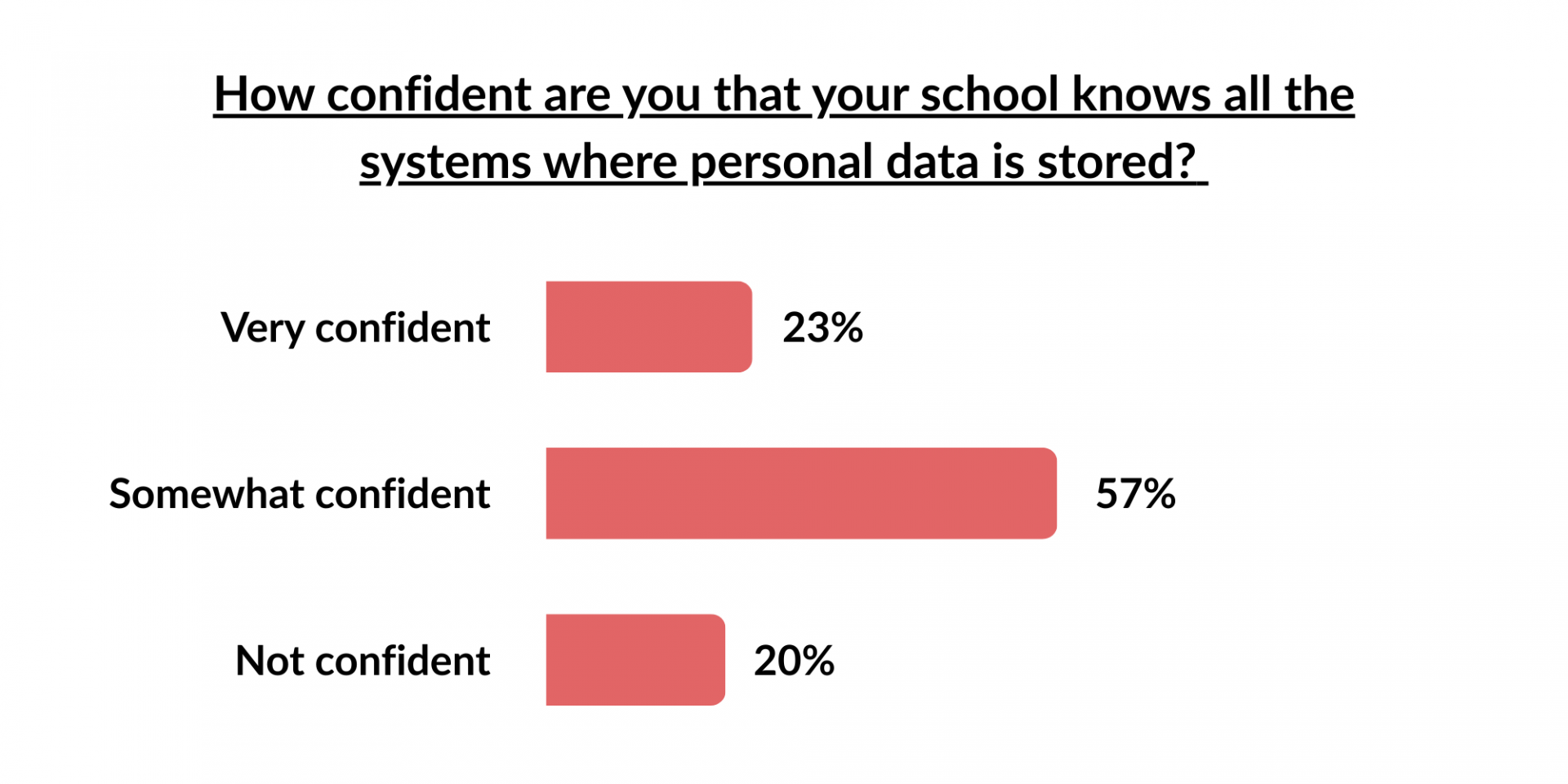
Data mapping, in essence, is a way of documenting the types of personal data the school holds, where it is stored, and how it is used. That includes data on your MIS, but also those on cloud systems, email platforms, backup systems, and third-party software.
A third-party data-sharing register is imperative, it provides full visibility on which suppliers hold specific data, allowing for a rapid response should a breach occur.
If you do not have a data map in place, your DPO would be able to help you get started. Judicium also provides DPO services, including a data mapping tool on our Jedu platform which streamlines the process by enabling schools to create data maps with ease.
The Risks of Over-retention
From supporting schools through an average of 42 data breach cases each week, we see first-hand how the volume of retained data determines the severity of an incident. Simply put, data you no longer need is data you no longer need to protect.
If a cyber-attack hit today, would the scale of the breach be limited to current records, or would years of historical data be at risk? While more than half of our audience believe they would know the approximate extent of a breach, an alarming third admitted they would not know what data would be affected in face of attacks without a significant investigation. Whether you have a rough idea or are entirely unsure, now is the time to review your policies and eliminate risks of over-retention.
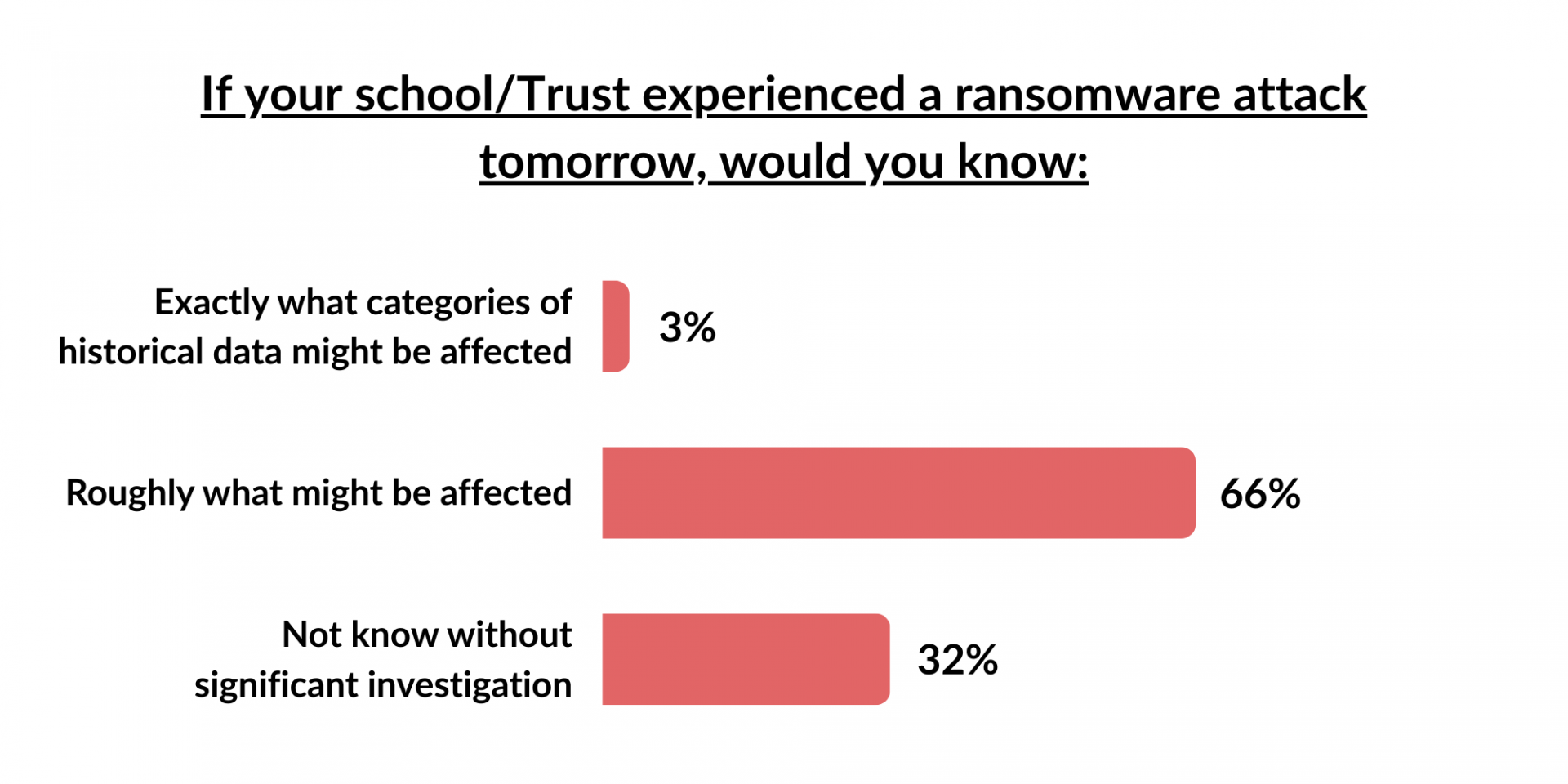
Over-retention is not just a compliance risk; it complicates every stage of a crisis. The more surplus data you store, the longer it will take you to locate vital information, respond to Subject Access Requests, or accurately identify what has been exposed, all while the ICO’s 72-hour reporting deadline is counting down.
Strong Data Retention Practices Make Breach Management Much Easier
With a clear data map, controlled storage locations, defined retention periods and limited legacy data, you will be able to better manage data breaches if and when they happen.
When dealing with a data breach, you will need to quickly assess the impact of the breach, isolate affected systems, report to the ICO within the 72-hour regulatory timeframe and communicate clearly with impacted individuals if necessary. This is why having clean, well-structured, and properly retained data is key.
In other words, retention is preventative breach management.
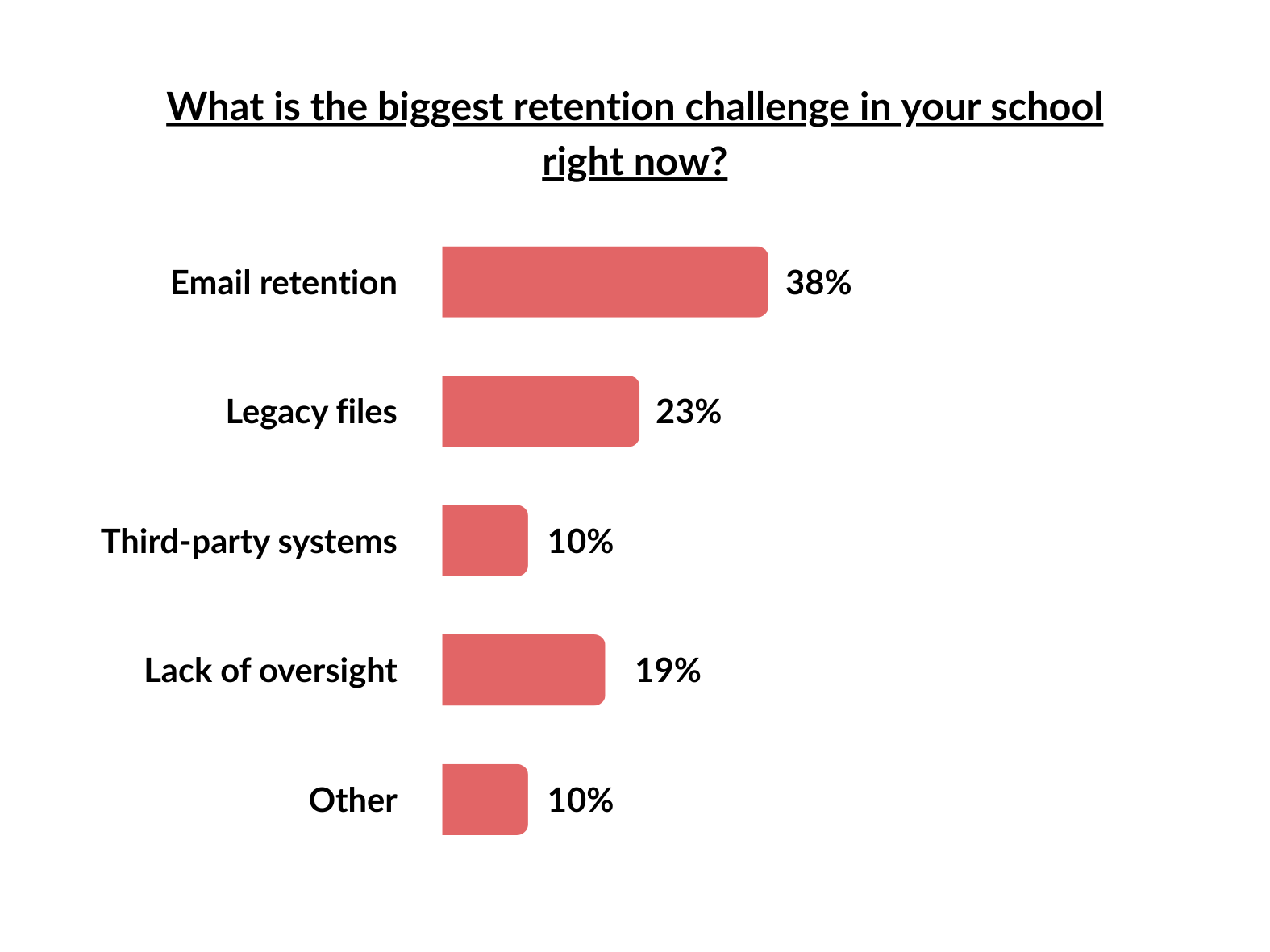
At the end of the day, we understand that every school's situation and the challenges they face are different, whether it is with email retention, legacy files, or something else. Therefore, having a dedicated DPO who can advise and offer bespoke support is invaluable. From keeping you up-to-date with the latest legal updates, to providing your team with the right training, and everything in between, our Data Protection Services are designed specifically for schools and MATs, to offer you peace of mind.
How Judicium can help...
You can find information regarding our School Data Protection service here.
Jedu is Judicium's online UK GDPR compliance tracking software for schools. Our platform is suitable for single schools to large MATs and is designed to assist schools with two critical needs: To enable trustees, Governors and other SLT to monitor UK GDPR compliance; and to assist you in managing your data protection.
If you would like more information on how we can support you or more information regarding Jedu, please get in touch with us.
If you require any support in any of these steps or would like to talk to someone about some support for your school, please do not hesitate to call us on 0345 548 7000 or email georgina.decosta@judicium.com.
Follow us on Twitter: @DPOforSchools and @JudiciumEDU.
Frequently Asked Questions (FAQs)
Start by reviewing the data map on an annual or biannual basis. To stay updated in between, keep a third-party data sharing register as a running list of where data is held. Whenever you sign-up to a new system or complete a DPIA, simply add that provider to the list.
Having this awareness of where data is held on these systems is part of accountability and is essential for managing any third-party data breaches.
There is not anything specifically within the UK GDPR or DPA 2018 at this time that states how long you should or should not keep email.
We recommend schools to keep them for the shortest amount of time that is practical and delete as soon as possible. It might be that some emails need to be kept for record, but they could be copied to a pupil or personnel file, where the rest could then be deleted.
(e.g. from primary to secondary)
Responsibility for maintaining the pupil record passes to the next school. Schools may wish to retain the information about the pupil for a short period to allow for any queries or reports to be completed or where linked records in the school information management system have not yet reached the end of their retention period and deleting would cause problems. But essentially, the 'last known school' is responsible for keeping the record to 25, which is usually secondary or sixth form.
© This content is the exclusive property of Judicium Education. The works are intended to provide an overview of the sofa session you attend and/or to be a learning aid to assist you and your school. However, any redistribution or reproduction of part or all of the contents in any form is prohibited. You may not, except with our express written permission, distribute or exploit the content. Failure to follow this guidance may result in Judicium either preventing you from accessing our sessions and/or follow-up content.
_1000.png)

_1000.png)