_1000.png)
Following several high-profile incidents, Martyn’s Law was introduced to improve how publicly accessible premises, including schools, consider and plan for emergency situations. It is not about installing specialist security systems but ensuring clarity of roles, good communication, and proportionate preparedness.
What is Martyn’s Law?
After the Manchester Arena attack in 2017, an inquiry recommended clearer expectations for emergency preparedness, hence the introduction of the Terrorism (Protection of Premises) Act 2025.
Otherwise known as Martyn’s Law, the Act aims to improve protective security and organisational preparedness in the event of a terrorist attack. It runs on a tiered system based on the capacity of the premises or events, with smaller venues expecting 200-799 people in the ‘Standard Tier’, and an ‘Enhanced Tier’ for 800+ which warrants additional measures to reduce vulnerability. Martyn’s Law received Royal Assent on 3 April 2025 and began an implementation period of at least 24 months before it would come into force.
Does Martyn's Law Apply to Schools?
Education settings will fall into the scope of the legislation, as they are publicly accessible settings where large numbers of people may be present. However, it is important to note that most education settings will be treated as Standard Tier, even if more than 800 individuals are expected to be present, as the enhanced requirements will not apply to premises used for early years provisions, primary or secondary education, or places of further education.
Whilst schools which expect less than 200 people to be present do not fall within the scope of the Act, they are also encouraged to have preparedness plans in place for the safety of their learners and staff. On the other hand, higher education establishments and privately owned independent training providers are subject to the tiered approach.
Key Questions for School Leaders
A terrorist incident in a school is defined by the UK Government as an action or threat of serious violence designed to influence the state or intimidate the public for a political, religious, racial, or ideological cause. From a school’s Health and Safety perspective, these are the questions you should ask yourself:
- What do we have in place to prevent such situations from happening?
- What will we do with staff and students in the face of such events, and how are we communicating with parents?
- What do we do after the event? (a drill could be a potential trigger for some people)
Schools will need to consider how they manage visitors, events, and access around the site. These often overlap with your existing strategies and procedures around Health and Safety, Safeguarding, and Fire Safety, so Martyn’s Law is usually building on what schools are already doing.
What Does Martyn’s Law Require Schools to Do?
For most schools in the Standard Tier, the requirements focus on practical, proportionate steps:
- Clear emergency procedures
- Staff awareness and confidence
- Simple site checks aligned with existing Health and Safety processes
The aim of the law is not to create complex or specialist security systems, but to ensure schools are prepared reasonably and proportionately. The law will be enforced by the Security Industry Authority (SIA) and requires schools to identify a Responsible Person, which can be the governing body or academy trust. The Responsible Person will oversee emergency preparedness and the site’s security arrangement, ensuring that emergency procedures are in place and understood.
For schools that fall within the scope of Martyn’s Law, the Responsible Person will need to notify the SIA when they become responsible for the premises. The SIA is currently developing the systems to manage this process which is expected to be live in Spring 2027.
Schools will also be expected to identify ‘reasonably foreseeable risks’ and have proportionate controls or measures. This may include security, improved signage, staff briefings, and regular practice drills. The school must have documented procedures covering:
- Evacuation (getting people safely out)
- Invacuation (moving people to a safe internal area whilst the threat is outside, this could be from a chemical spill, nearby violence or extreme weather)
- Lockdown (securing of school when the threat is inside the building such as an intruder or active attacker)
- Communication (how the school alerts and instructs people during an incident)
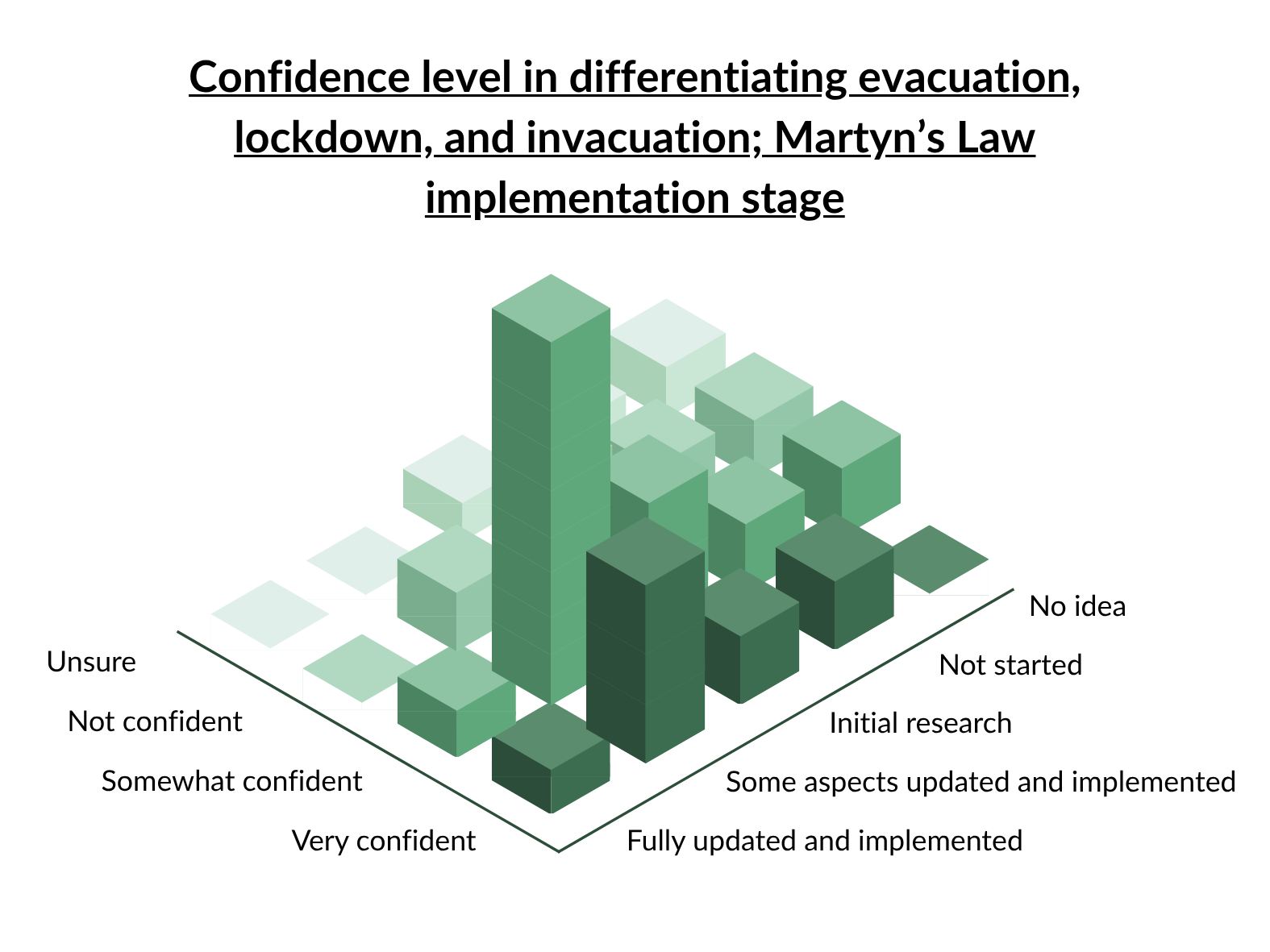
In our recent sofa session, 41% of the audience mentioned they feel somewhat confident about the various terms and have already started prepping for Martyn's Law. There's a clear link between how confident people feel and their progress with implementation, having a solid grasp of how these situations differ is key to getting compliance right.
Ensuring Effective Communication with Parents
A recent incident in Norfolk highlighted the importance of communication, where parents found out about their children’s school being lockdown through social media and were distressed when they could not obtain any direct information to understand what was happening and whether their children were safe.
Effective communication with parents and carers helps uphold reputation and maintain strong Health and Safety standards in schools. Clear, timely updates help reduce confusion during incidents and support the ongoing improvement of safety procedures.
.png)
It is not surprising to see communication during incidents listed as the top area of improvement, followed by staff awareness and confidence. Martyn’s Law provides a perfect opportunity for schools to explain to parents and carers on how the law will be implemented in a school setting; by sharing how drills and real events will be managed, schools can build trust and reduce anxiety. Clear communication also helps families understand the purpose of these safety measures and how they contribute to keeping everyone safe.
Are There Any Platforms or Tools Schools Can Use in Preparation?
Jedu, Judicium’s online Health & Safety audit compliance reporting software for schools and MATs, includes a Martyn’s Law Tier Identification & Standard Tier Checklist that will support schools to:
- Determine which tier applies
- Review what the law requires for their tier
- Check whether emergency procedures (evacuation, invacuation, lockdown, communication) are clear, documented, and understood
- Identify any areas that may need strengthening
It is recommended that schools run emergency invacuation and lockdown drills at least once a year. They should also be carried out whenever there are significant changes, including:
- Building layout – new classrooms, extensions, or altered access routes
- Student population – changes in age groups, needs, or numbers
- Procedures – updated safeguarding, behaviours, or emergency plans
Conducting routine drills helps everyone stay confident and prepared for when a real emergency happens. It is important to also consider breakfast clubs, after school activities, and how a response would need to change if an event occurred during these times.
What Should Schools be Doing Now?
Any improvements should remain proportionate and practical, and directly connected to your existing emergency arrangements. We recommend schools focus on three key areas:
- Review Existing Procedures - Look at your visitor management, access control, and how you manage contractors and events. Consider whether visitors know what to do in an emergency, whether access is controlled effectively, and whether staff supervising visitors are aware of their responsibilities.
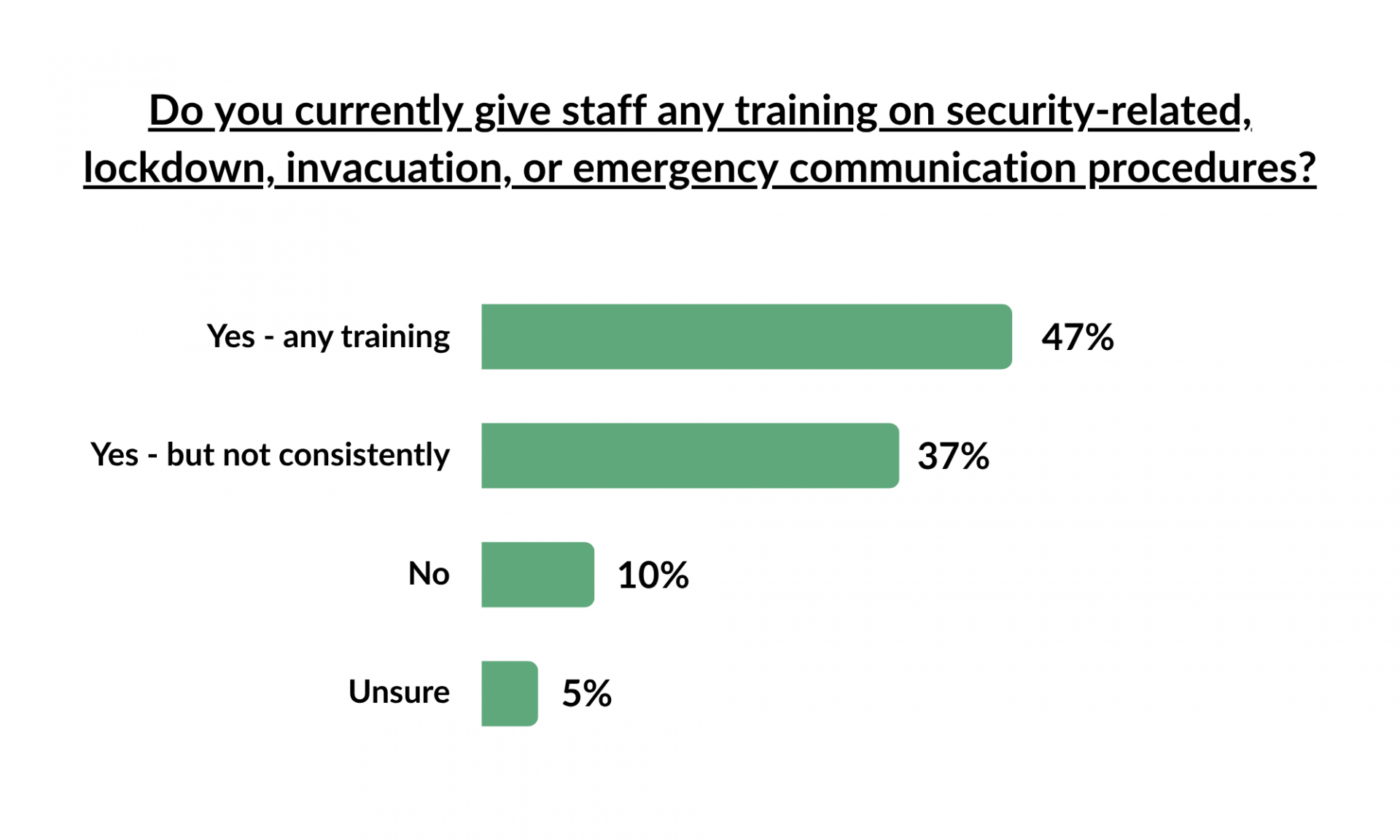
- Staff Awareness - Ensure all staff understand emergency procedures through simple inductions, awareness-raising, and occasional scenario-based drills or tabletop exercises. It is great to see that an overwhelming majority (around 85%) of our audience provide staff training on security-related, lockdown, invacuation, or emergency communication procedures, the next step would be to improve consistency and embed it into your school culture.
- Site-specific Planning - Every school environment is unique and onsite staff are best placed to understand their buildings, community, and the specific dynamics within it. For example, schools with many wheelchair users may decide it is safer to secure students where they are during a lockdown rather than attempt an invacuation, where moving multiple individuals may not be reasonable or safe.
Our experience across all types of educational settings means we understand these nuances and can help schools create plans that truly work for them.
How Judicium can help...
Judicium Education’s Health and Safety Service is designed to support schools, to embed practical, consistent safety systems that protect pupils and support staff confidence.
Our Health and Safety audit process is also updated to fully reflect Martyn’s Law requirements, across areas like Responsible Person, emergency procedures, practice drills, and visitor management. A Martyn’s Law Identification and Standard Tier Checklist will also be available on Jedu to help offer you a peace a mind in preparing for implementation.
You can find information regarding our school Health & Safety services here.
If you would like to talk to someone about some support for your school or trust, do not hesitate to call us on 0345 548 7000 or email enquiries@judicium.com.
Follow us on X: @JudiciumEDU.
Frequently Asked Questions (FAQs)
Yes, it does.
When you review your arrangements, it is important to also think about how your fire safety systems may support or affect your assessments. For example, you might have a manual call point in the reception area that, when activated, unlocked or opens all doors across the school. Another important consideration is understanding the difference between a standard fire alarm sounder and the sounders used for invacuation or lockdown.
These types of issues can be talked through with your Health, Safety, and Fire Safety consultant, who can help you understand the impact and ensure everything works together safely and effectively.
Not necessarily. While fire drills are great for practicing standard evacuation, they do not cover scenarios like invacuation or lockdown, where routes and logic can be quite different.
Corridors designed for emergency exits are meant for getting people out quickly, which may not be the best suited for an invacuation, where you need to move an entire school inward to a secure, central space.
© This content is the exclusive property of Judicium Education. The works are intended to provide an overview of the sofa session you attend and/or to be a learning aid to assist you and your school. However, any redistribution or reproduction of part or all of the contents in any form is prohibited. You may not, except with our express written permission, distribute or exploit the content. Failure to follow this guidance may result in Judicium either preventing you from accessing our sessions and/or follow-up content.

_1000.png)